Mekong Boat cruise & Sophamith waterfall in Stung Treng
TOUR HIGHLIGHTS Cruise by boat along the meandering Mekong River. Behold the mighty Sophamith Waterfall. Explore the Flooding Forest of Ramsar & the sand dunes…

Board a longtail boat and cruise the Mekong north toward the Laos border — past flooded forests, sand-dune islands, and a 26-meter waterfall that marks the edge of Cambodia.
Most travelers pass through Stung Treng on their way to somewhere else — Ratanakiri, Laos, or back south to Phnom Penh. That’s a mistake. The stretch of Mekong between Stung Treng town and the Laos border is one of the most scenic river corridors in Southeast Asia, and almost no tourists bother to explore it.
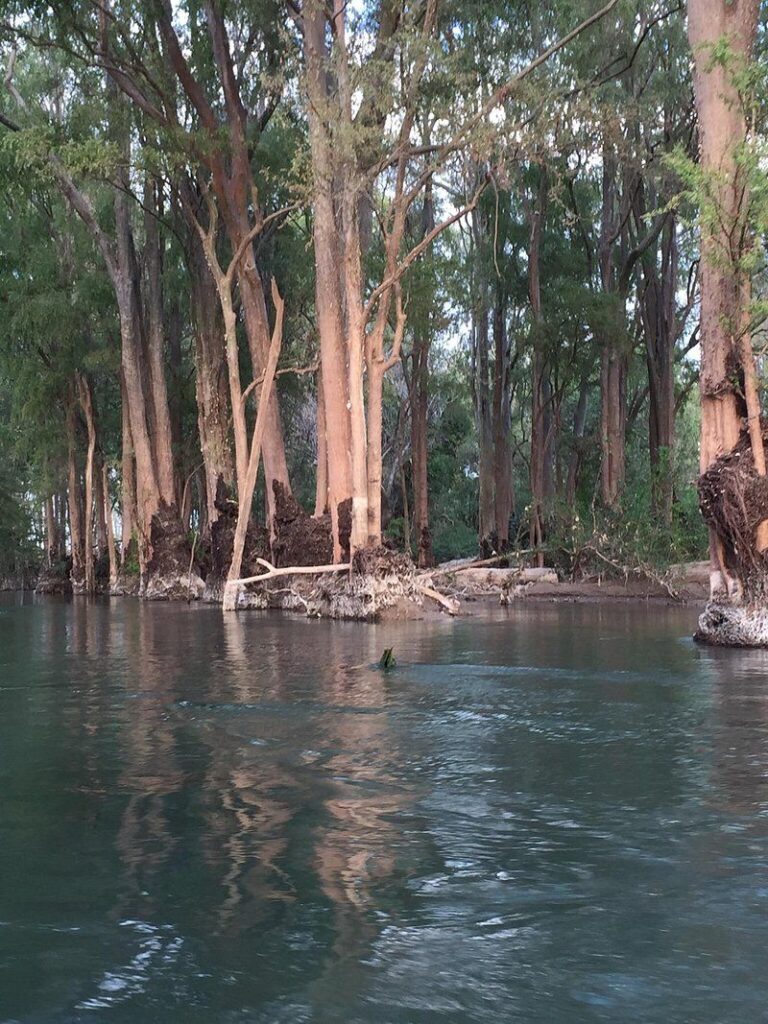
Head upstream by longtail boat and within an hour the riverside towns disappear. The Mekong widens into a maze of channels, rocky outcrops, and forested islands. The RAMSAR-designated flooded forest — where trees grow directly from the riverbed and bend under seasonal currents — looks like something from a nature documentary. Further north, the river narrows and drops over Sophamith Waterfall, a roaring 26-meter cascade right on the Cambodian-Lao border. It’s the kind of waterfall you feel in your chest.
Koh Han Island sits in the middle of the Mekong about two-thirds of the way up. It’s a community-based ecotourism site — meaning local families run the homestays, cook the meals, and guide you around. Sunsets from the island, with the river stretching wide in both directions, are the best in Cambodia. Nobody argues about this because nobody else is there to argue with.
Day cruises and overnight island adventures
TOUR HIGHLIGHTS Cruise by boat along the meandering Mekong River. Behold the mighty Sophamith Waterfall. Explore the Flooding Forest of Ramsar & the sand dunes…
TOUR HIGHLIGHTS Cruise by boat along the meandering Mekong River. Behold the mighty Sophamith Waterfall. Explore the Flooding Forest of Ramsar & the sand dunes…
Stung Treng sits at the meeting point of the Mekong and Sekong rivers, about 40 km south of the Laos border. The town itself is quiet — a few market streets, some French-era buildings, a dusty riverfront. But the Mekong corridor north of town is where things get interesting. The river here is wide, wild, and largely untouched. Rocky outcrops create rapids and whirlpools. Forested islands dot the channels. The flooded forest along the banks has been designated a Ramsar Wetland of International Importance — home to over 100 bird species and one of the most unusual riverine ecosystems in Asia.
About two hours upstream from Stung Treng, the Mekong drops 26 meters over a limestone ledge — Sophamith (sometimes spelled Sopheakmith) Waterfall. It’s not a single elegant cascade; it’s a wide, violent wall of water smashing over boulders. The French colonial administration tried to build a railway portage around it, and remnants of those tracks are still visible on the banks. You can get close enough to feel the spray. The waterfall sits right on the Cambodian-Lao border, and on a clear day you can see Laos from the viewing areas.
Koh Han is a Mekong island about halfway between Stung Treng and the waterfall. A small community runs homestay accommodation and camping as part of a Community-Based Ecotourism (CBET) project. You sleep in wooden houses or tents, eat fish caught that morning, and watch the Mekong turn gold at sunset. The island has no cars, no noise, and no Wi-Fi — which is the entire point. On two-day tours, you spend the night here and continue to the waterfall the next morning.
Stung Treng is approximately 455 km from Phnom Penh (7–8 hours by road) and 150 km from Banlung in Ratanakiri (2.5 hours). It sits on the main highway connecting Phnom Penh to the Laos border. Daily buses connect to Phnom Penh, Kratie, and Banlung. Most travelers visit Stung Treng as part of a larger northeast Cambodia itinerary — combining it with Ratanakiri trekking and Kratie dolphin watching. We arrange all local boat transfers and can include Stung Treng in any multi-day package.
By longtail boat from Stung Treng town — about 2 hours upstream. There’s no road access. Our tours include the boat, a guide, and all logistics. The ride itself is half the experience: rapids, rocky channels, flooded forest, and fishing villages along the way.
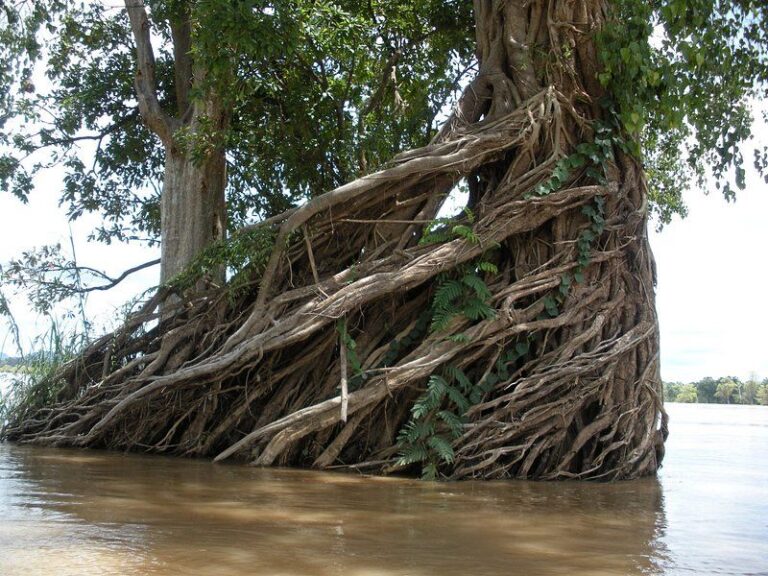
A stretch of forest along the Mekong north of Stung Treng where trees grow directly from the riverbed. During wet season, the river rises several meters and submerges the trees entirely. In dry season (November onward), the water drops and exposes twisted root formations and bent trunks — a strange, beautiful landscape best explored by boat.
Yes. The 2-day tour includes an overnight on the island — either in a local family homestay or camping in a tent. Dinner is fresh fish from the river, cooked by your hosts. It’s basic but genuinely comfortable, and the sunset and sunrise from the island are outstanding.
November to May (dry season) is best. The river is lower, the flooded forest root formations are exposed, and boat navigation is easier. Sophamith Waterfall is impressive year-round, but during peak wet season (August–October) some river sections can be tricky to navigate.
Absolutely — that’s how most people visit. Stung Treng is on the road between Kratie (dolphins) and Banlung (jungle trekking). Adding a 1 or 2-day Mekong boat tour in Stung Treng fits naturally into any northeast Cambodia itinerary without backtracking.
Drop us a message — we'll add Stung Treng to your itinerary or set up a standalone trip.